MRIA SMPWR
Small Modular Pressurized Water Reactor
A conceptual Small Modular Nuclear Steam Supply System (NSSS) based on proven PWR/VVER principles. Designed for the Ukrainian energy model with primary focus on thermal energy production and flexibly controllable electricity generation.
Wartime & Post-War Security
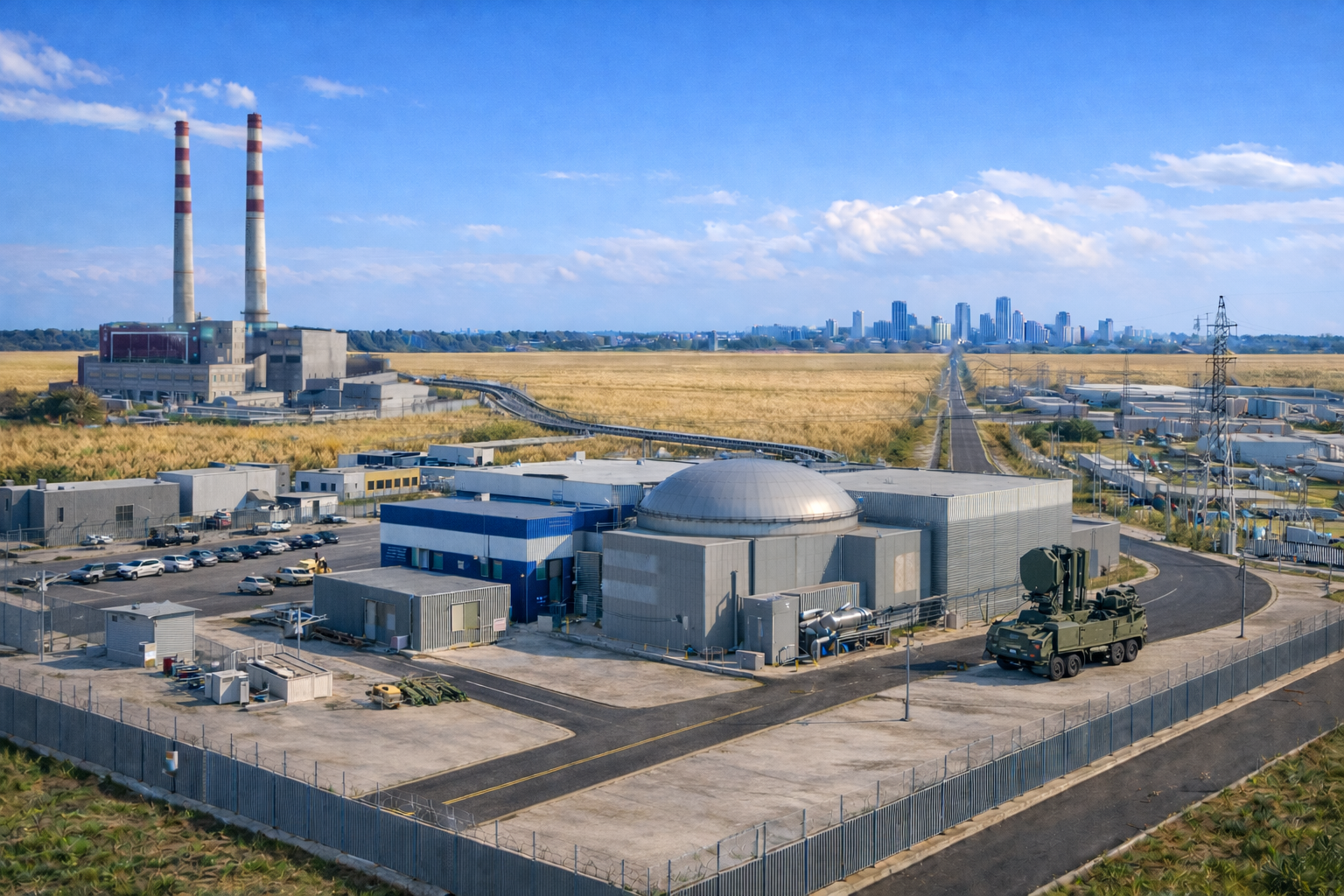
Given the realities of wartime and post-war conditions, MRIA SMPWR includes a multi-layer physical protection system — including radar detection, UAV countermeasures, and access control systems.
The Nuclear Island is designed for underground placement, using specialized high-strength concrete with ballistic and blast resistance to drastically reduce vulnerability to aerial attacks, artillery, and other external threats.
Scalable Multi-Module Configuration
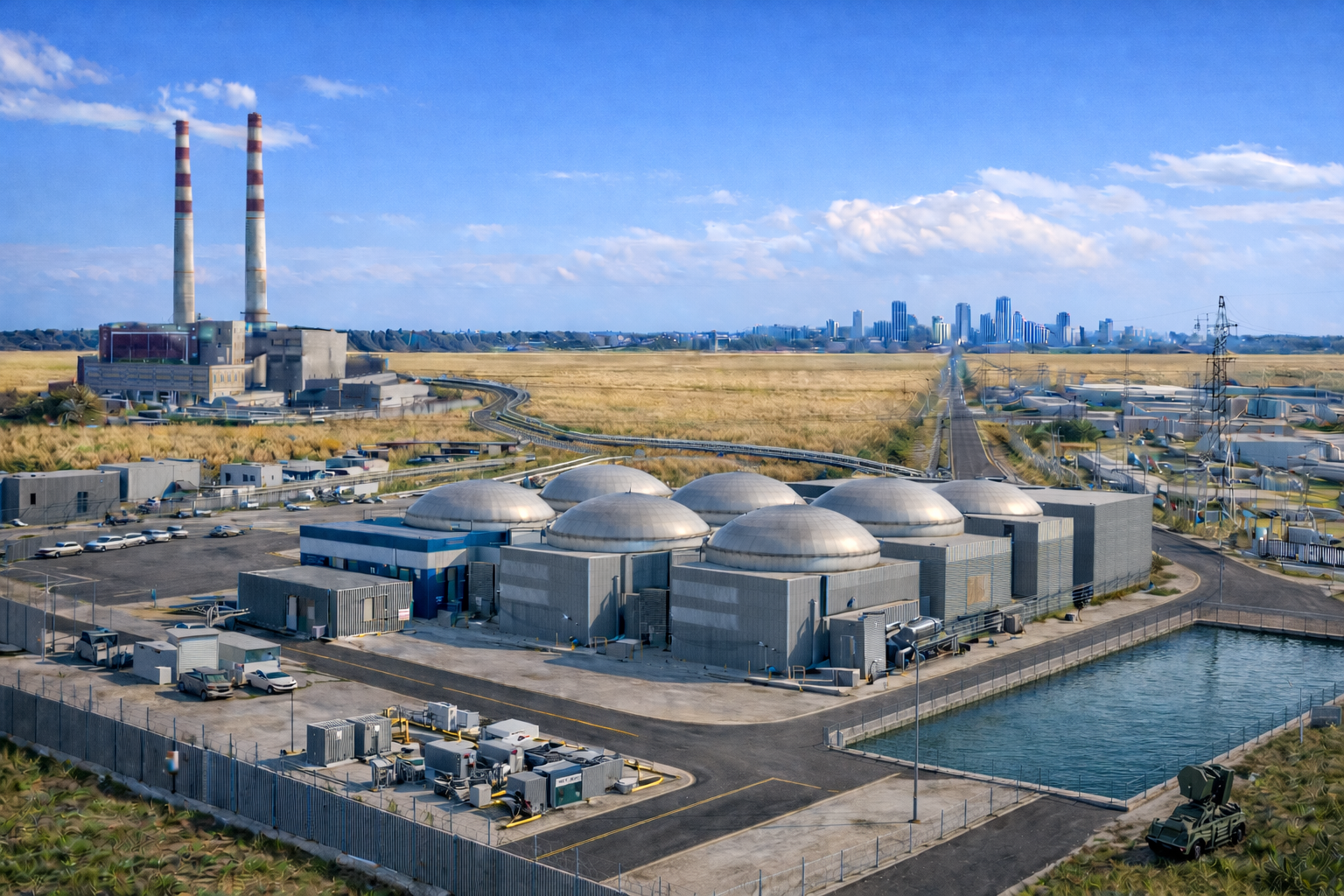
The modular design enables flexible scaling from a single unit to multi-module complexes. Each module operates independently while sharing common infrastructure — turbine hall, cooling systems, and control facilities.
This approach allows for phased deployment, matching capacity to growing demand without over-investment. A typical multi-module complex can reach 300-500 MWe total electrical output.
Purpose & Vision
Primary Focus: Thermal Energy
Unlike conventional SMRs focused on electricity, MRIA SMPWR is optimized for district heating and industrial heat supply. Electricity generation is an integral but flexibly controllable secondary function.
Evolutionary Approach
Based on proven VVER technology with decades of operational experience. No experimental or unproven technologies — focus on simplified licensing and industrial implementability.
- Compatible with existing regulatory frameworks
- Leverages existing expertise and supply chains
Technical Specifications
Nominal Thermal Power
~500 MWt
Electrical Output (gross)
75-90 MWe
Design Service Life
Up to 100 years
Design Pressure
~15.7 MPa
Coolant Temp (in/out)
287 / 320 °C
Coolant Flow Rate
8,000–10,000 m³/h
Fuel Enrichment
Up to 4.95% U-235
RPV Height / Diameter
8–9 m / 3.2 m
Underground Nuclear Island
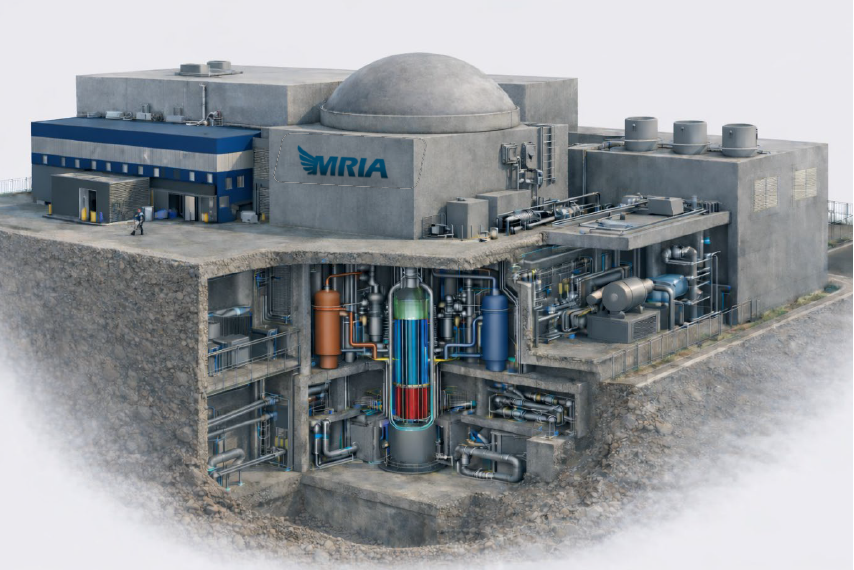
The cross-section view reveals the key design feature: the reactor pressure vessel and primary circuit components are located below ground level, protected by reinforced concrete structures.
- Reactor vessel with control rod assemblies
- Steam generators and pressurizer
- Emergency core cooling systems
- Turbine hall and auxiliary systems above ground
Applications
District & Industrial Heat Supply
Providing thermal energy for cities and industrial facilities
Post-War Recovery
Reconstruction and modernization of damaged CHP plants
Critical Infrastructure
Military and security-related facilities
Green Hydrogen Production
Via electrolysis during periods of reduced electricity demand
Hybrid Energy Systems
Integration with renewable energy sources (solar and wind)
Backup Power
Replacement capacity for existing CHPs and thermal power plants
Safety & Security
The Nuclear Island is designed for underground placement, drastically reducing vulnerability to external threats including:
- Aerial attacks and blast loads
- Natural disasters
- Unauthorized physical access
- Classical PWR/VVER layout with established safety principles
- Passive safety characteristics with high thermal and hydraulic inertia
- Underground placement of Nuclear Island for enhanced protection
- Specialized high-strength concrete with ballistic and blast-resistance
- Multi-layer physical protection system (radar, UAV detection, access control)
Development Roadmap
- Completion of conceptual framework
- Formation of inter-institutional team
- Alignment with state authorities
- Preparation of FOAK site
- Basic and detailed design documentation
- Safety and operational solutions
- Licensing documentation
- Localization of supply chains
- Nuclear and turbine island construction
- Safety systems installation
- Cold and hot testing
- Pilot operation
- FOAK results analysis
- Design optimization
- Serial module deployment
- Multi-module complexes
Key Partners
SYNERGOATOM SE
Initiator & Governing Body
Czech Republic
WITKOWITZ GROUP
Industrial backbone
Czech Republic
Institute for Nuclear Research
Scientific platform
Ukraine
Sumy State University
Research partner
Ukraine
Czech Technical University
ALLOBOR-5 development
Czech Republic
Офіційні учасники проекту
Провідні наукові та освітні установи України, які формують науково-технічну основу проекту MRIA SMPWR




Summary
MRIA SMPWR represents a transitional technological model designed to address Ukraine's specific energy needs. With a nominal thermal power of ~500 MWt and electrical output of 75-90 MWe, it is optimized for combined heat and power generation.
The concept prioritizes thermal energy production as the primary function, with electricity as a flexible secondary output. Based on proven VVER technology, it offers a path to post-war recovery, energy security, and preparation for future advanced SMR deployment.
